figma community
Forge.
Figma plugin · Styles in, Figma Variables out
the problem
Styles were the past. Variables are the handoff.
Most mature Figma files predate Variables. Colors, text, and effects live as styles, the documentation lives in a Notion page, and engineers get hex codes in a spreadsheet. Moving to Variables by hand means recreating every value and rebinding every layer, which is exactly the kind of work nobody schedules.
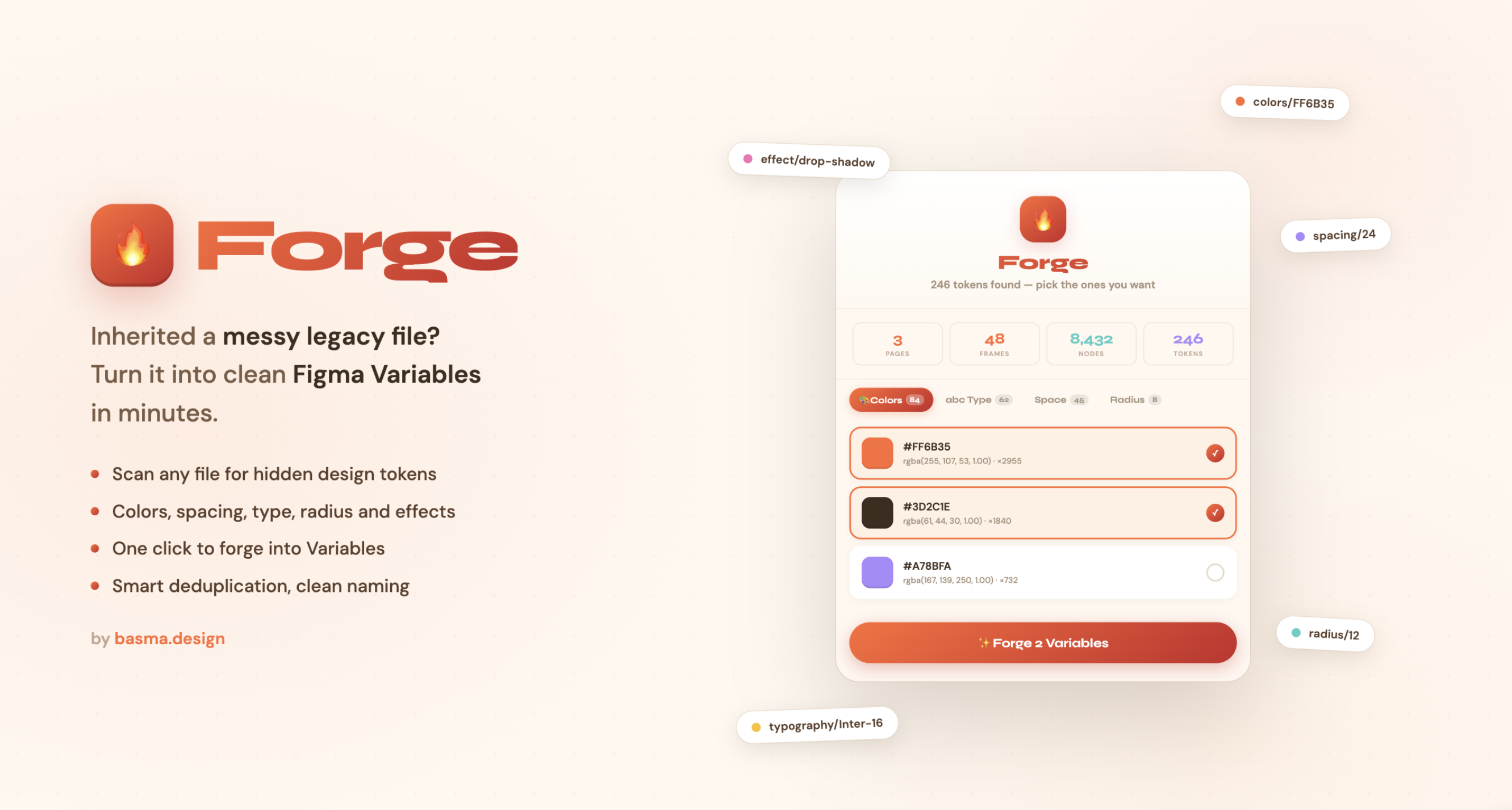
Forge does the tedious part. It reads the styles a file already has, turns them into a token set, and creates the Variables for you, so the tokens, the documentation, and the handoff finally point at the same source.
how it works
Three steps, no retyping.
Extract
Forge scans the color, text, and effect styles in the current file and lists them as design tokens, grouped the way a token system expects.
Review
Check names and groups before anything is created. The token structure you approve is the one that ends up in the file.
Convert
Forge generates the Figma Variables and collections from the approved set, so the file becomes variable-driven and ready for modes, documentation, and code handoff.
why it matters
What changes.
One source of truth
Tokens, documentation, and handoff read from the same Variables instead of three drifting copies.
Built for existing files
Forge is for the file you already have, not a greenfield setup. Legacy styles become a modern token layer.
Hours, not days
What used to be a manual migration becomes a run of the plugin and a review pass.
Free on Figma Community
Install it, run it on a copy of your file, keep what works.